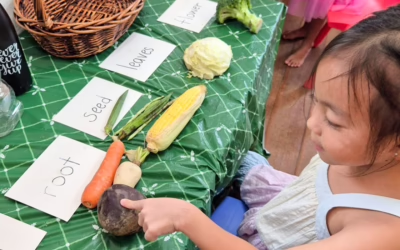
A child making a choice — for example, reaching for materials on a low shelf or selecting from art supplies. This visually represents independence and self-expression.
Problem-solving in action — children building something together with blocks or Lego, experimenting and negotiating where pieces go. This ties to real-world problem-solving and teamwork.
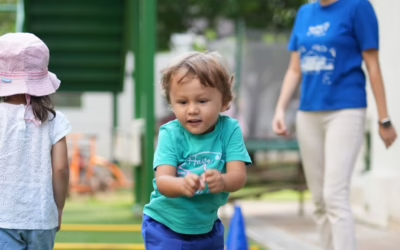
Playful discovery — a child exploring outdoors (examining leaves, water play, or sand) with curiosity on their face. This captures the “curious” side of the theme.
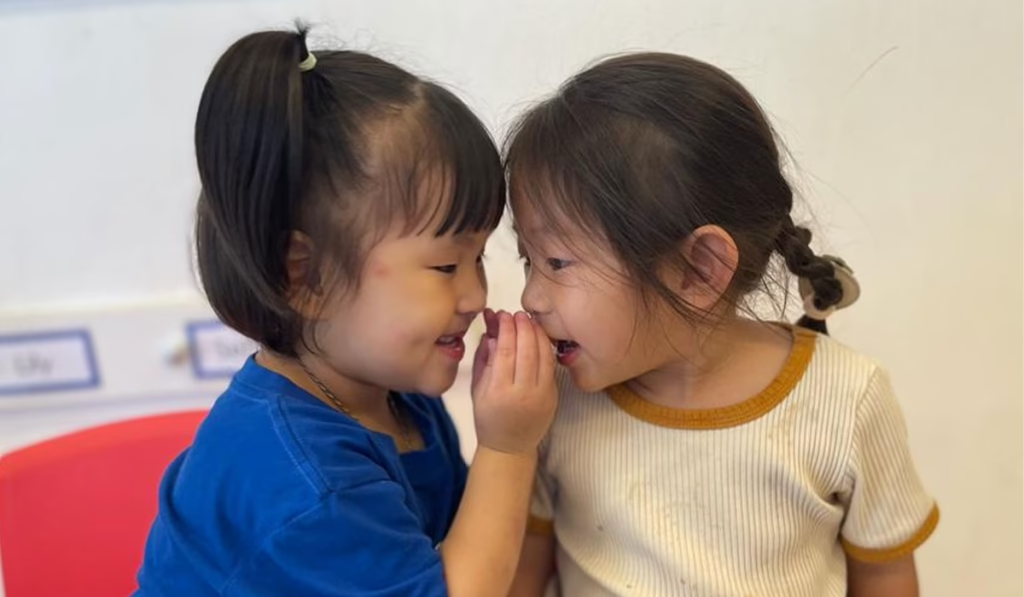
Emotional safety and social intelligence — a warm moment of children in conversation or helping each other, e.g. one comforting another or working side by side.
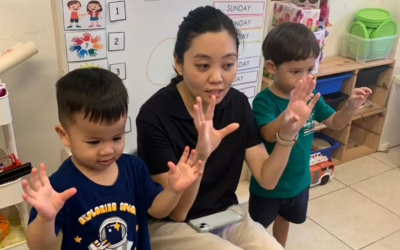
Group collaboration — small group activity like cooking, storytelling, or dramatic play. This combines confidence (taking part), curiosity (experimenting), and social growth.]
Have you noticed how your young child insists on trying things their own way? Or perhaps repeating the same action, again and again?
From choosing which block to stack first, to asking ‘why’ five times in a row, these moments reflect early signs of confidence and curiosity at work.
Children grow best when they are given space to explore, decide, and problem-solve. With the right support, everyday experiences turn into opportunities to build independence, express themselves, and connect with others.
Over time, these small steps add up to a strong sense of self, and a natural eagerness to learn.
In this article, you’ll learn how we combine independence, problem-solving, play, emotional safety, and social intelligence to nurture confident, curious learners. You’ll also hear what Heartfield Kindergarten parents have observed at home, and how these qualities continue to shine beyond the classroom.
Supporting Independence and Self-Expression
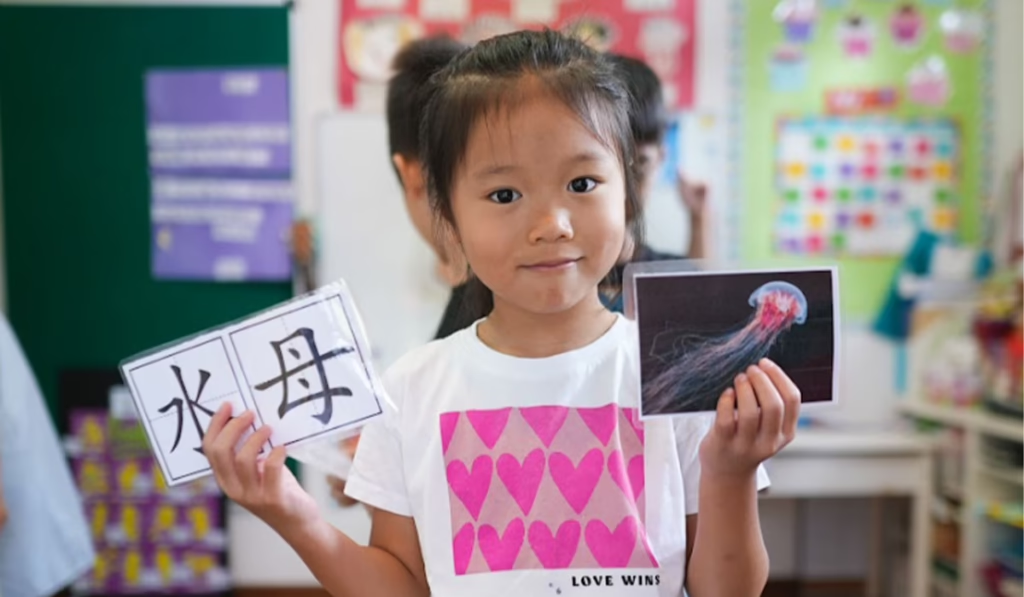
Have you ever seen the spark in a child’s eyes when they get to decide for themselves? Research shows that giving children autonomy, even in small, everyday choices, builds both motivation and self-confidence (Deci & Ryan, 2000).
At Heartfield Kindergarten, independence is woven into our daily routines. Our classrooms are designed to allow our children to access what they need without asking for help. Materials for drawing, building, and storytelling are displayed at a child level, inviting them to choose their own learning adventure.
Our teachers guide this process with gentle structure. Visual routines on the walls remind children what comes next, while soft prompts like “What do you think we should do now?” encourage initiative without taking over. This allows children to move at their own pace, learning to manage transitions and responsibilities on their own terms.
Self-expression is just as important as independence here. During lessons, our teachers listen carefully to their children’s preferences and ideas. A child may suggest telling a story through puppets instead of drawing it on paper. Another may enjoy sharing their feelings during circle time. Each choice is valued, showing children that their voices matter.
How We Build Real-World Problem-Solving Skills
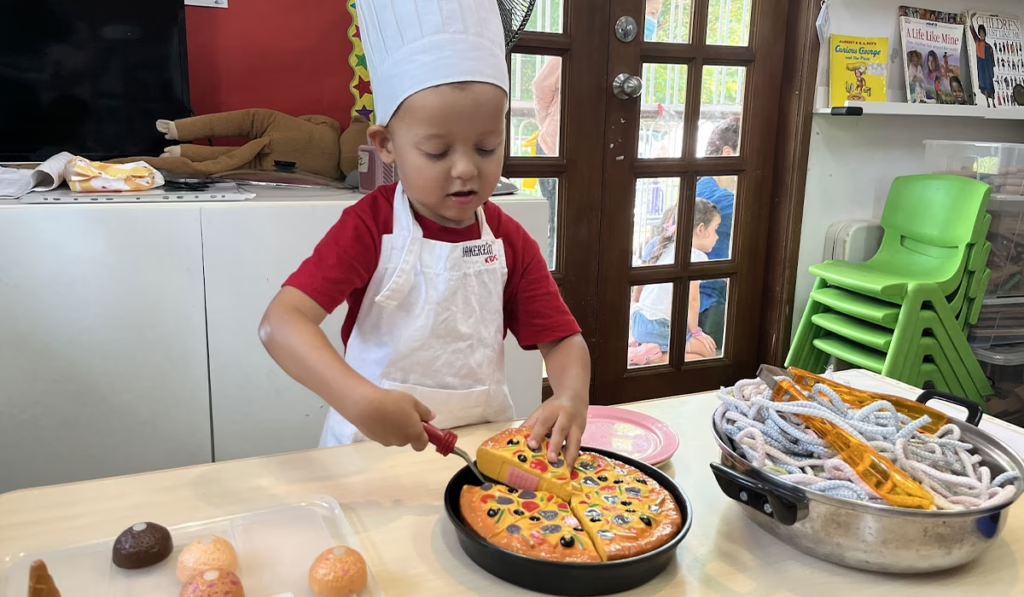
Problem-solving is a daily habit in our classrooms. Long before your child faces formal lessons, our everyday activities prepare them to think flexibly, test ideas, and persevere until they find a solution.
We’re not alone in thinking so. A 1993 ERIC Digest titled Problem Solving in Early Childhood Classrooms revealed that problem-solving is foundational for a young child’s learning. Children learn most effectively when they explore, experiment, make hypotheses, and construct knowledge through discovery.
Here at Heartfield, your child will learn how to solve problems in multiple ways. Cooking sessions teach them to measure, stir, and adjust until the recipe works. Sequencing a story helps them piece ideas together in the correct order. Building towers calls for persistence, steady hands, and creative thinking.
Our teachers guide the process with gentle prompts rather than immediate answers. When a tower topples, they may ask, “Let’s see, what else could you try?” or “How can we make this stronger?” These questions encourage reflection while keeping your child in charge of the solution.
Over time, your child develops quiet confidence in their own abilities. Packing their bag, moving between activities, or completing a task with care becomes part of their routine. Each success shows them that they are capable of solving challenges both in school and in life.
Learning Through Play
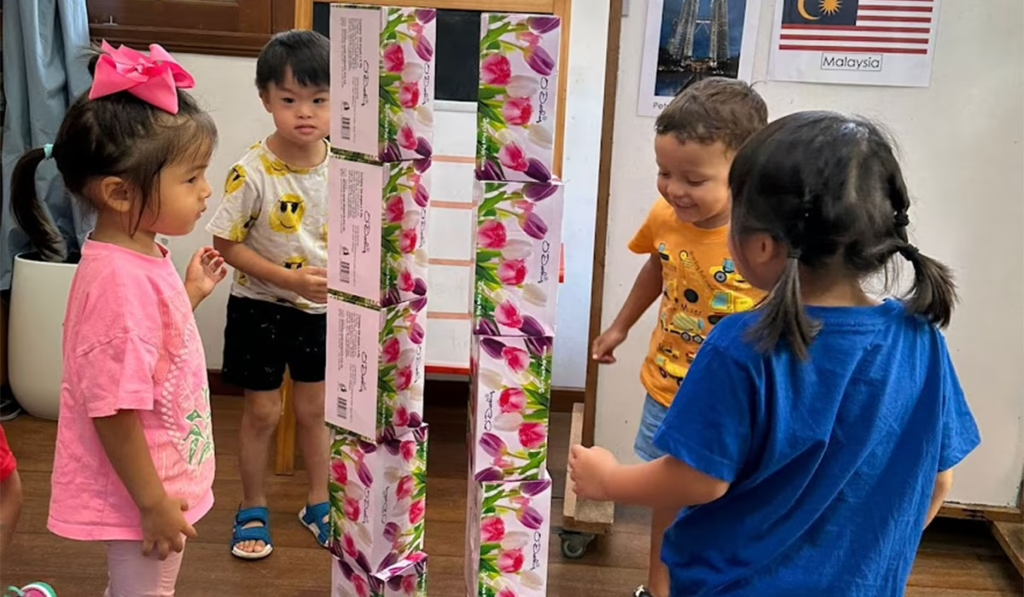
“All work and no play makes Jack a dull child.” And Jill, too, we might add.
Your child’s most meaningful learning experiences often happen when they are busy playing, imagining, building, expressing, and exploring.
Here at Heartfield, play is both inviting and purposeful. Your child will encounter thoughtfully arranged spaces: a cosy reading nook, an imaginative role-play area, blocks, craft materials, and nature corners.
Each of these stations offers an invitation to explore. Your child can choose where to go, what to build, and how long to linger. One day, they may reimagine a cardboard box as a rocket. The next day, they may lead a puppet show with friends, unfolding their own little drama.
Our teachers stay close as attentive observers, ready to step in when it helps. Rather than direct, they offer a kind nudge, such as, “I notice your castle has a new door. What do you think should come next?” By stepping in only when needed, we help your child take the lead in their own play while gently expanding their ideas.
Research from Singapore supports this approach. A local study confirmed that purposeful play, where learning is built into open-ended moments, helps children develop science process skills such as observing, comparing, and asking questions through hands-on discovery.
Ensuring Emotional Safety
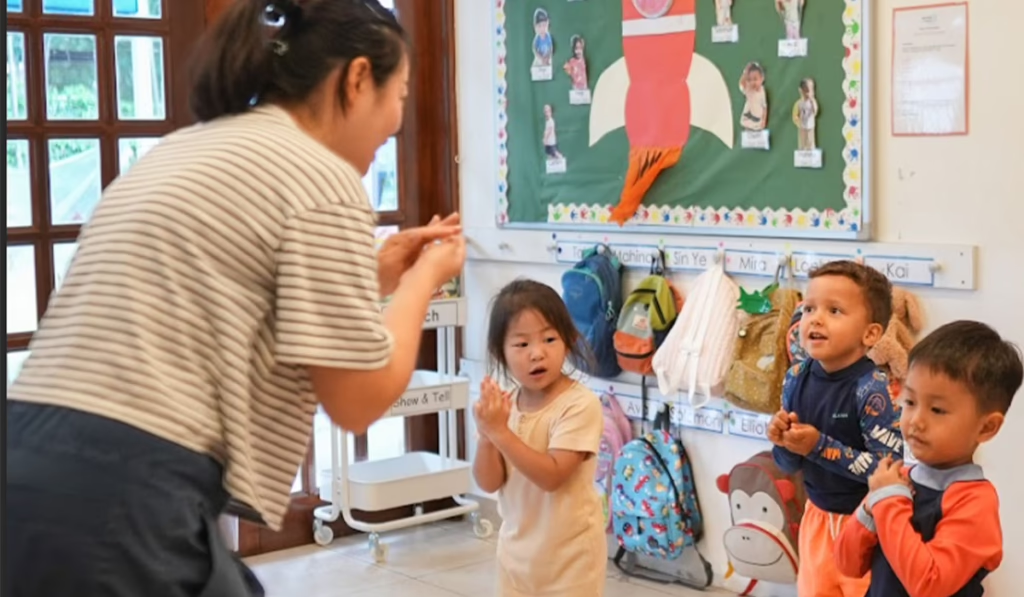
Imagine your child saying, “I feel frustrated,” instead of bursting into tears. Or quietly slipping into a cosy corner when they need a moment to calm down.
These little signs show that they have an emotional safety mechanism in place, equipping them with the tools to manage their feelings before the storm arrives.
We teach children the full vocabulary of emotions in everyday moments. Joy, sadness, frustration, pride, naming each feeling helps your child to recognise what is happening inside and to express it clearly.
Our teachers model calm, respectful responses. When disagreements happen, they guide children through conflict without blame or shame, showing that challenges can be solved with kindness. Quiet corners are always available for those who need space to breathe and reset, giving children permission to pause instead of react.
We also weave emotions into play and storytelling. Journals, picture books, and dramatic role-play become safe outlets for children to explore what different feelings look and sound like.
Through these experiences, your child learns that emotions are not something to fear or hide from, but an integral part of growing up with confidence and care.
How We Encourage Social Intelligence
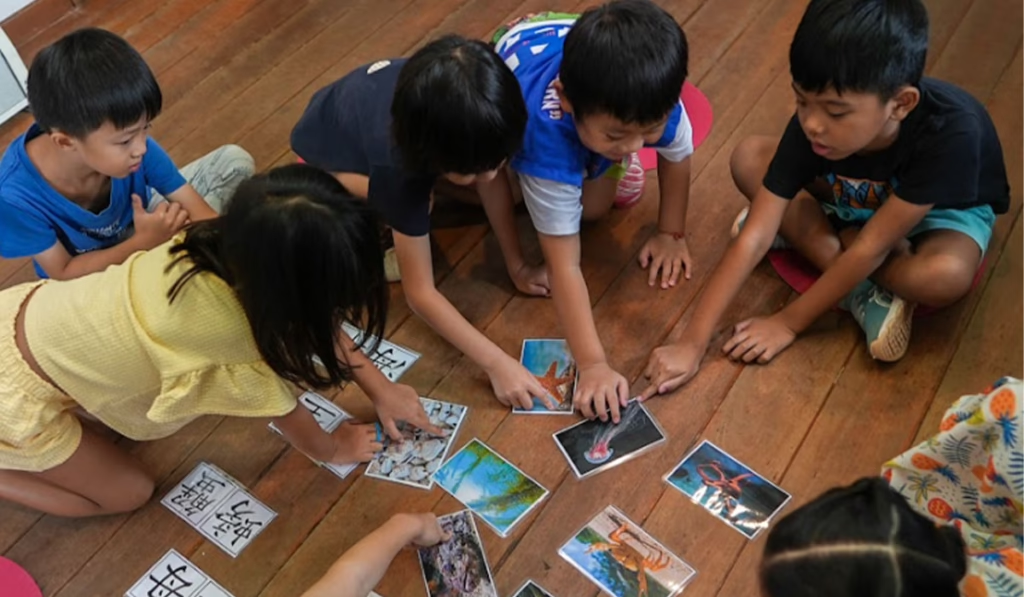
On a typical morning at Heartfield, a group of children may gather around a tub of blocks. One begins stacking, another offers to fetch more pieces, while a third suggests turning the tower into a bridge.
Voices overlap as they negotiate whose idea to try first. There are giggles when it wobbles, a few disagreements over where the arches should go, and finally, cheers when the structure holds.
Scenes like this happen daily in our classrooms. Working in pairs or small groups teaches your child to take turns, listen to others, and share responsibility for a common goal. Mixed-age activities add another dimension, our older children will naturally mentor younger ones, learning patience and leadership in the process.
Our teachers step in not to solve disputes but to guide reflection. Questions such as “What worked well together?” or “How did you make this happen?”can help your child think about teamwork while celebrating the process, not just the result.
Here, mistakes become stepping stones to success. When a game or project does not go as planned, we remind our children that trying again is part of learning. In this safe environment, social intelligence blossoms—cooperation, empathy, and resilience grow hand in hand.
What Heartfield Parents Tell Us
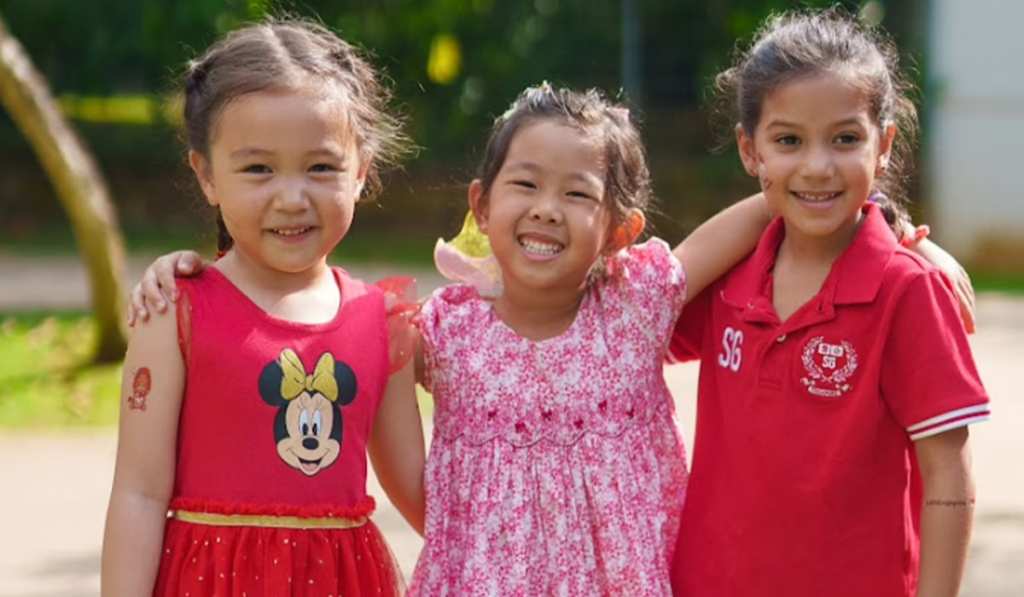
Most importantly, parents tell us that after joining Heartfield Kindergarten, their children begin to show greater initiative at home. Often, their kids can dress themselves or pack their own bags independently.
Parents also noticed how their children start to use positive language more frequently. For example, one child told a teacher something along the lines of “You are creative,” while another was heard saying, “Let me think about this… how can we solve this problem?”
Some parents see their children explaining feelings or resolving sibling disagreements more calmly. Others notice a growing curiosity—their children start asking more questions, spotting patterns, or inventing stories about the world around them.
At Heartfield Kindergarten, every child grows into a confident and curious learner. Located at 31 Balmoral Road, we invite you to explore our multi-sensorial campus. Call us at +65 6835 2354, email info@HeartfieldKindergarten.com, or visit our website to arrange a visit.