Heard the term “holistic education” and wondered what it means? How does a holistic learning approach affect your young kindergarten-aged child?
During their early years, your child learns and grows holistically through exposure to multiple channels. They learn to express ideas, manage emotions, form friendships, coordinate their movements, explore new concepts and create through play.
These early experiences shape how they approach learning in later years, and play a significant influence on how they see themselves.
In this article, we explore what holistic education means in early childhood, how it differs from traditional modes of learning, and the benefits it offers young children. You will also learn how we put these principles into practice at Heartfield, and how you can support your child’s growth at home.
What Is Holistic Development in Early Childhood?
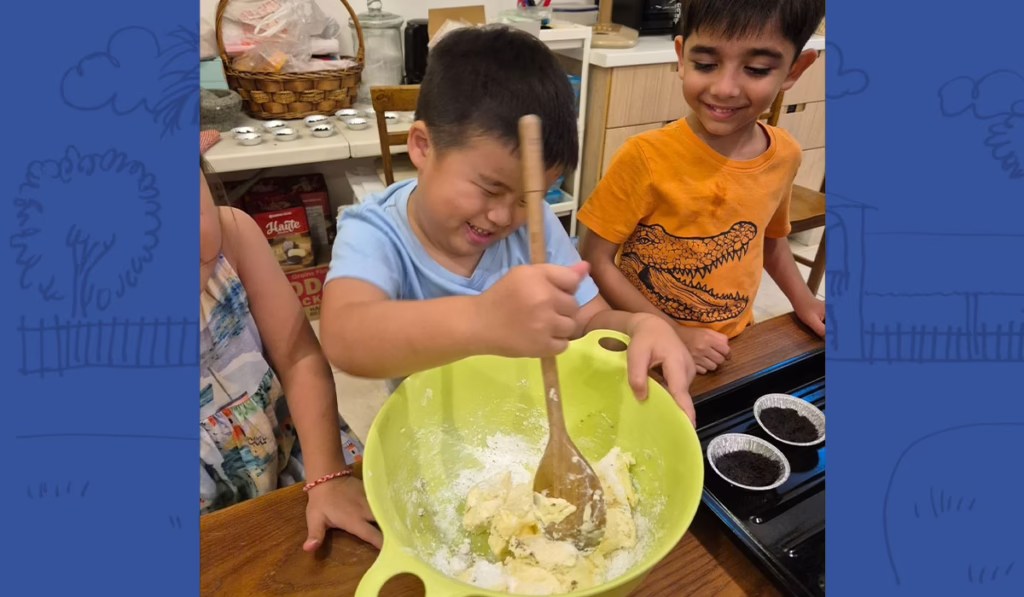
Holistic development is an approach to early growth in which a child’s social, emotional, physical, creative, and cognitive abilities develop together as interconnected parts of a single learning process.
To grasp the whole meaning of holistic education, it helps to look at the five core domains of your child’s early development:
- Social: The ability to interact with, share, and collaborate with peers.
- Emotional: The ability to understand their feelings as well as others, while developing resilience.
- Physical: The ability to master both gross and fine motor skills.
- Creative: The ability to freely express their ideas through their imagination and art.
- Cognitive: The ability to process information, form memories, and develop reasoning skills.
In the real world, these domains blend naturally. A child building a tower with friends simultaneously balances blocks (physical), learns physics (cognitive), negotiates roles (social), and manages frustration if the tower falls (emotional).
Thus, holistic growth provides your child a steady base of confidence while supporting the development of a healthy, secure sense of self.
Why Holistic Education Matters in the Early Years
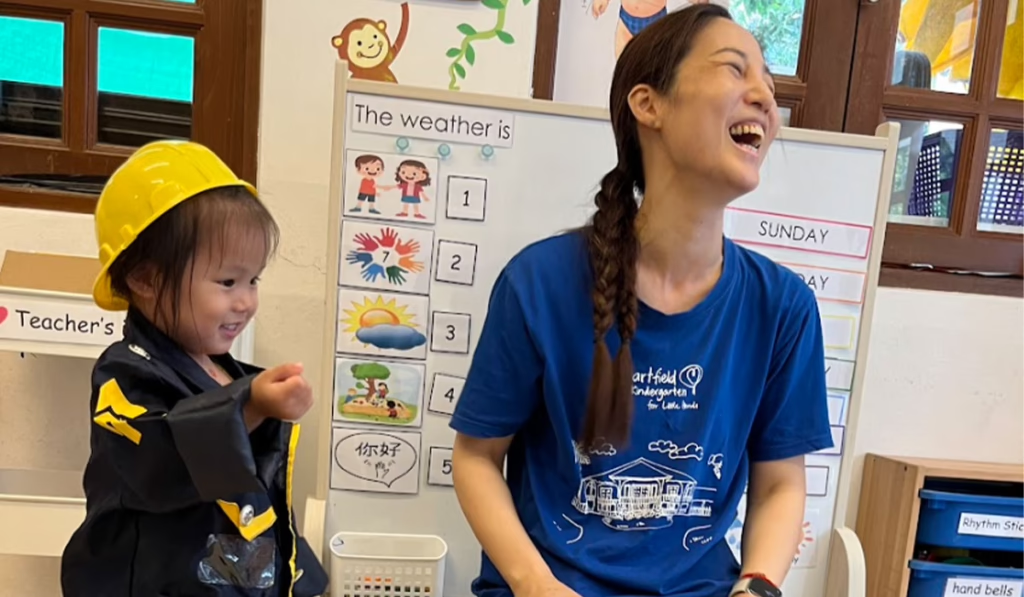
Why do holistic pedagogies matter in kindergarten? Such deep levels of engagement are crucial because your child’s early experiences form the neurological foundation for their future learning.
When a child feels capable and connected during their formative years, they associate education with positivity and discovery. Learning stops being a chore and becomes a natural, exciting process. This builds deep-seated confidence, making new challenges feel approachable and “easy” rather than intimidating.
While focusing on specific academic milestones has its place, a holistic approach ensures that our children develop the essential life skills needed to support those academics. It nurtures curiosity about how things work, a focus on seeing a task through, and emotional steadiness to handle the ups and downs of trial and error.
Ultimately, looking at the “whole child” does more than prepare them for school; it prepares them for life. By developing a wide range of skills early on, children gain the adaptability to navigate new situations with ease, setting them on the path to becoming passionate, lifelong learners.
Holistic Education vs. Traditional Approaches
To understand the value of a holistic approach, it helps to compare it to more traditional approaches to education.
Traditional learning methods often prioritise structure and specific academic milestones. They provide a clear roadmap for learning letters, numbers, and classroom routines, offering a stable environment where children know exactly what to expect.
A holistic whole-child model builds on this foundation, but widens the lens. Instead of separating learning into distinct subjects, it treats development as an interconnected web.
This integrative approach supports deeper learning by connecting new information to a child’s physical and emotional experiences, making the lessons “stick” because they feel relevant to their real life.
In practice, such learning looks active and alive:
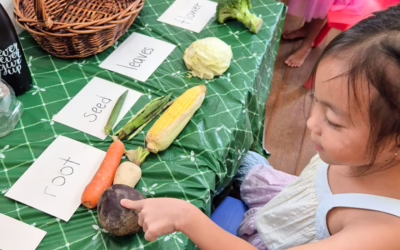
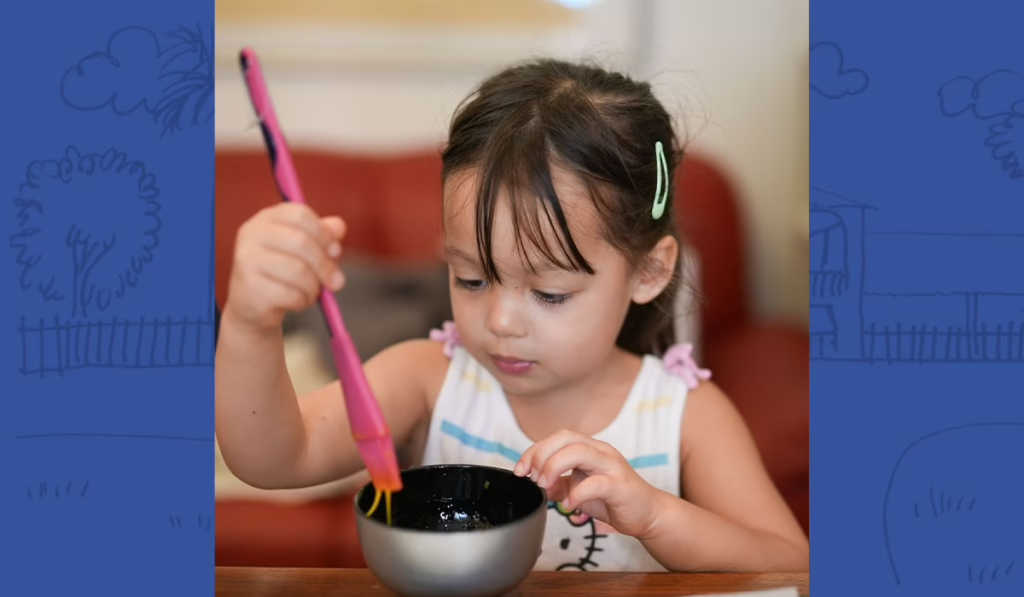
- Hands-on tasks: Children may sort leaves by shape, or build bridges with boxes, grounding abstract concepts like geometry in the physical world.
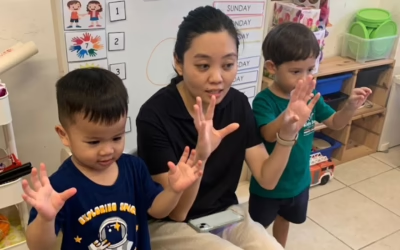
- Conversation-based learning: Circle time becomes a space for storytelling and debating ideas, building vocabulary and confidence.
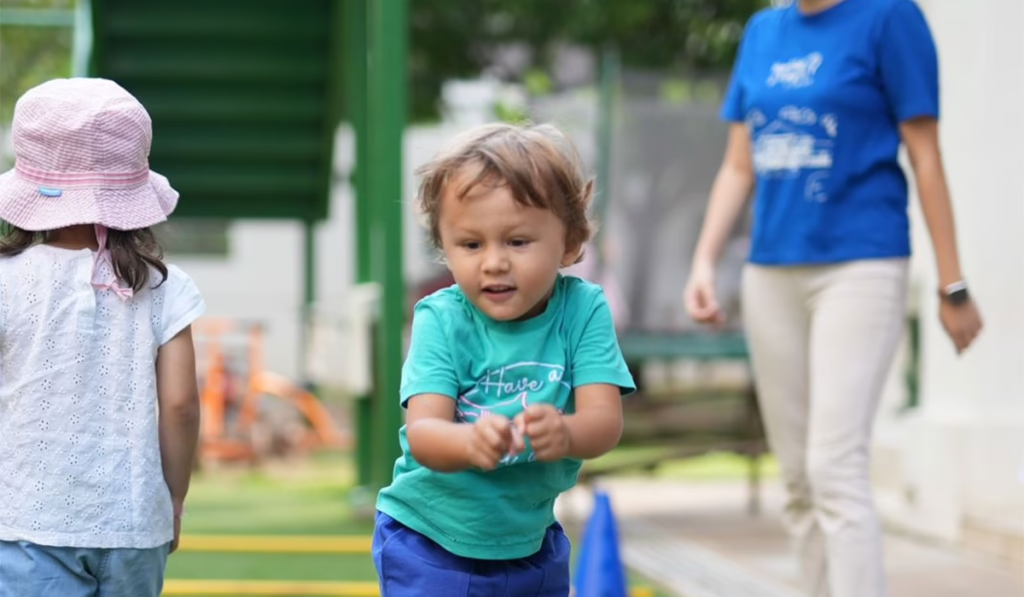
- Purposeful play and movement: Rather than sit for long periods, children learn through movement, such as counting jumps, acting out stories, or navigating obstacle courses.
Such experiences do double (and sometimes triple) duty. They sharpen thinking skills by requiring children to solve problems on the fly (e.g., “How do I make this bridge stand up?”), and they foster emotional resilience by creating safe spaces to try, fail, and try again.
When a child navigates a disagreement during a game or figures out a tricky puzzle, they build the mental toughness they will need for every challenge that comes after.
Benefits of Holistic Development for Young Children
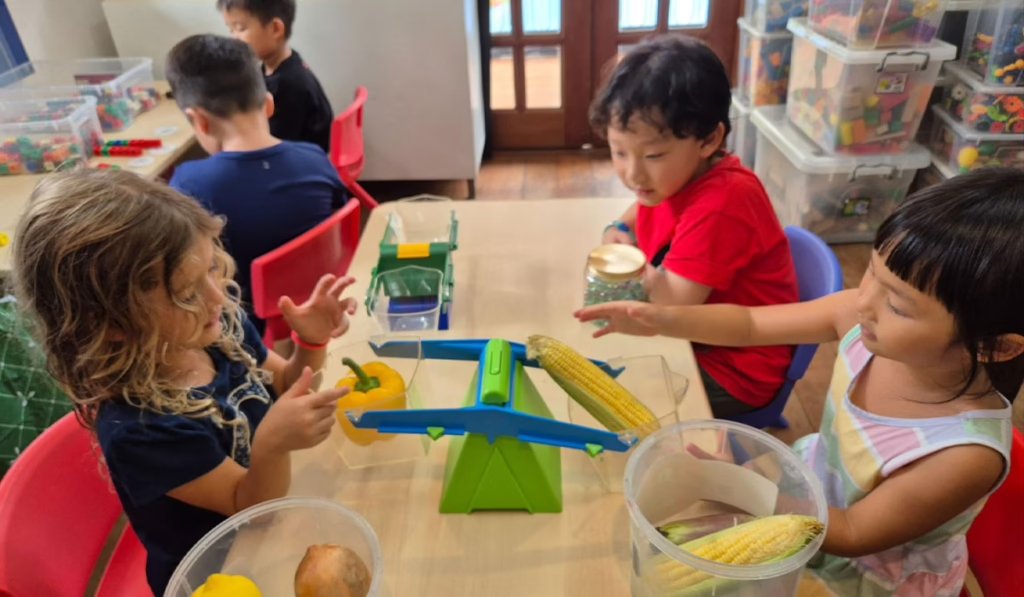
Ready to give holistic education a spin? It helps to know exactly what your child gains when we nurture their whole self. Here are some of its benefits:
#1 Steady Confidence
True confidence comes from mastering challenges at a personal pace. Your child engages with new tasks step by step, celebrating every small win along the way. This builds a rock-solid belief that “I can do this,” equipping them to face future obstacles.
#2 Expanding Curiosity
Ever watched a child deeply absorbed in investigating a bug or a shadow? When children explore their world freely, they turn their “whys” and “hows” into a daily habit of discovery. This natural drive to investigate fosters a vibrant love for learning that extends beyond classroom walls.
#3 Real-World Problem Solving
Meaningful puzzles, like fixing a broken toy or organising a group game, invite children to think on their feet. They tackle these hands-on scenarios with creativity, sharpening their critical thinking skills in real-time. By testing different ideas to see what works, they develop the logic and resilience needed to solve complex problems.
#4 Empathy & Communication
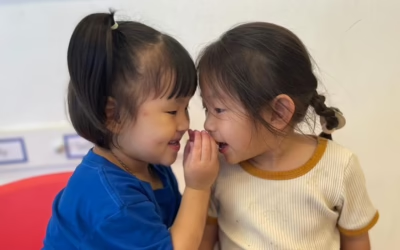
Strong relationships begin with the ability to connect deeply with others. Through shared play and teamwork, your child learns to listen actively and appreciate how their peers are feeling. This helps them navigate friendships with kindness, articulating their own ideas while respecting the views of others.
#5 Primary School Readiness
One of the greatest gifts of holistic development is social-emotional stability. Your child develops the inner balance needed to manage their feelings and interactions independently. This emotional anchor allows them to walk into primary school ready to focus, participate, and make new friends with ease.
How Heartfield Nurtures Holistic Growth
At Heartfield Kindergarten, we bring holistic development to life through many small, meaningful moments woven into each day.
Let’s start with outdoor play, where children have the space to move confidently, test their abilities and strengthen their physical skills. Back in the classroom, sensory-rich tasks such as scooping, pouring, moulding clay and exploring natural materials keep them focused, curious and fully engaged.
As the day progresses, cooperative projects bring children together to share ideas, practise teamwork and build communication skills in tangible, practical ways. Storytelling and music add yet another layer to their growth. Through songs, narratives and role-play, children develop language, imagination and emotional expression. We also include short moments of reflection to help them pause, recognise their feelings and settle their minds before moving on.
Throughout these experiences, our teachers remain a steady and reassuring presence. They offer warmth, encouragement and gentle guidance, knowing when to step in and when to give your child room to explore on their own.
Located at 31 Balmoral Road, we invite you to see how we nurture every aspect of a child. Call us at +65 6835 2354, email info@HeartfieldKindergarten.com, or visit our website to arrange a visit.