Have you wondered why your child loves lining up toy cars in perfect order? Or zipping and closing their bag carefully, step by step?
These moments show sequencing in action, an essential skill for every preschool-aged child.
Sequencing helps children understand how their world fits together. It guides them to recognise what comes first, next, and last, from brushing their teeth before bed to arranging story cards in order. Each sequence strengthens their ability to plan, remember, and complete tasks with growing confidence.
In this article, you’ll explore what purposeful sequencing means, how it connects to executive function, and why both cognitive and motor sequencing matter for preschoolers. You’ll also see how sequencing builds independence and readiness for Primary 1, with simple ways to nurture it at home.
Let’s begin by looking at what purposeful sequencing means in early childhood education.
Purposeful Sequencing in Early Childhood Education
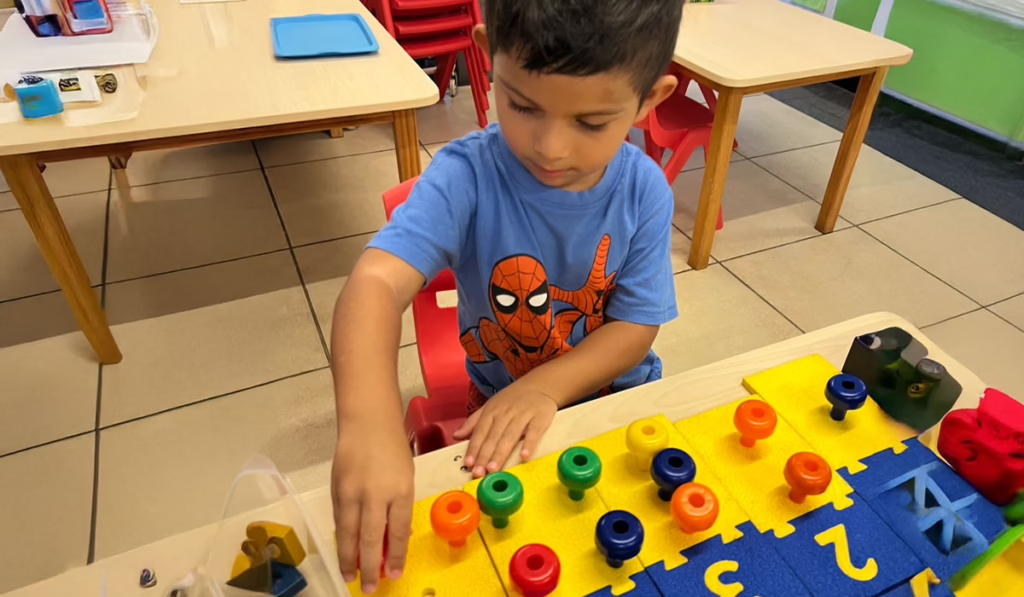
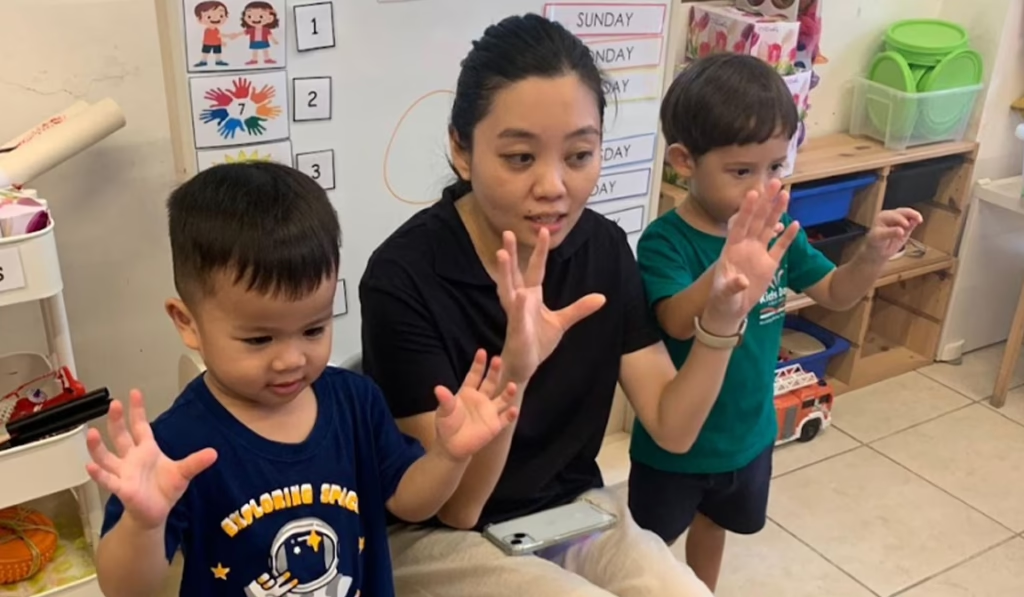
Have you watched a teacher lead a group of children through a game, starting simple and adding more steps as they go? That’s purposeful sequencing in action. Learning is arranged in clear, intentional steps so that your child can build confidence and mastery, one layer at a time.
In early childhood education, purposeful sequencing helps children connect what they already know to what they are about to learn. Teachers plan lessons so that skills and concepts unfold in a logical order, progressing from simple to complex, and from concrete to abstract.
A child may learn to stack blocks before counting them, or retell a story before writing it down.
Purposeful sequencing is also part of the Ministry of Education’s Nurturing Early Learners (NEL) Framework, which guides teachers to develop children’s process skills effectively. This ensures that every activity contributes to a bigger picture of understanding and growth.
Executive Function and Sequencing
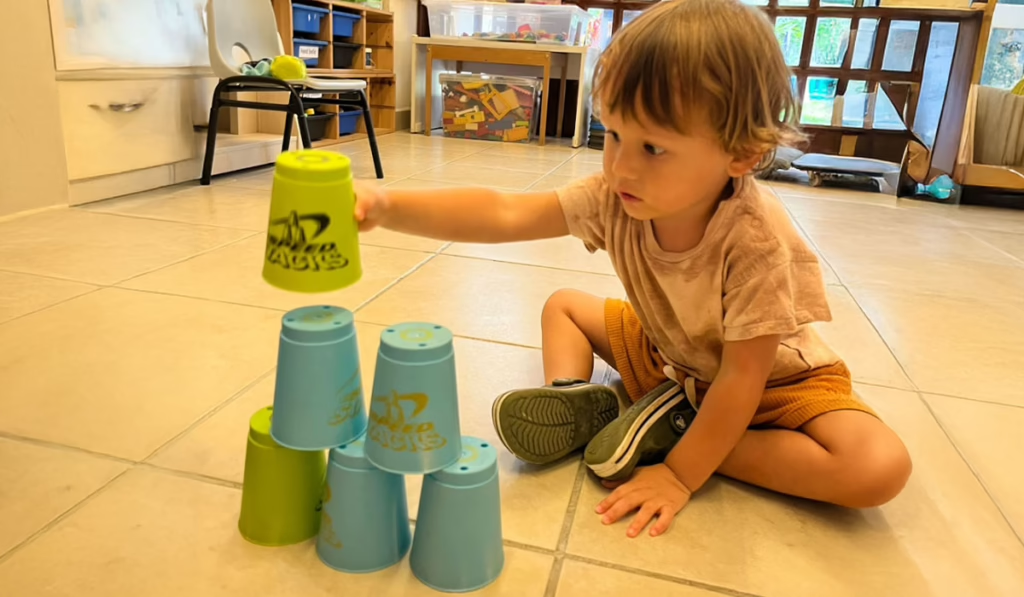
When your child follows the rules of a new board game or remembers the steps in a song, they are exercising their executive functions, the mental skills that help them plan, focus, and manage their actions to reach a goal.
For preschoolers, these skills are still developing, and sequencing gives them a natural way to strengthen them. When your child follows steps to make a sandwich, build a tower with blocks, or prepare art materials, they practise holding information in mind, controlling impulses, and adjusting when plans change.
Executive function and sequencing grow hand in hand. As your children learn to organise actions in order, they begin to organise their thinking too. This blend of planning, remembering, and adapting helps them approach daily routines and classroom tasks with growing confidence and independence.
Two Types of Sequencing: Cognitive and Motor Skills
According to experts, developing children acquire both thinking and movement skills through sequencing.
Cognitive sequencing involves mentally organising events or steps. It helps your child remember what to do first, next, and last when completing a task. This may mean recalling the order of a story, following a recipe, or planning a simple project from start to finish.
Motor sequencing, on the other hand, focuses on carrying out physical actions in order. Everyday routines such as dressing, brushing teeth, or completing an obstacle course rely on this skill. As your child learns to coordinate movements smoothly, they begin to build stronger connections between mind and body.
Both types of sequencing work together. When children practise physical sequences, they also reinforce mental ones, and vice versa. Activities that blend both, such as dance, sports, or construction play, help them strengthen coordination, attention, and memory.
How Sequencing Supports Independence
As your child learns to follow steps in order, they start to rely less on constant reminders and more on their own memory and reasoning. Sequencing gives them a sense of control and confidence, knowing what comes next and how to get there.
According to the Child Mind Institute, this growing independence is a vital part of early development, helping children build self-regulation and confidence through repeated practice. Daily routines like getting dressed, packing a school bag, or setting the table help children practise independence in small but meaningful ways.
Each sequence strengthens logical thinking and task planning. It also supports language development as your child learns to explain or describe what they’re doing. When children talk through the steps of a process, they reinforce both communication and comprehension skills.
Sequencing further helps children move smoothly from one activity to another. When they understand the flow of their day, transitions feel easier and group routines run more cooperatively.
Sequencing Matters for Primary 1 Readiness
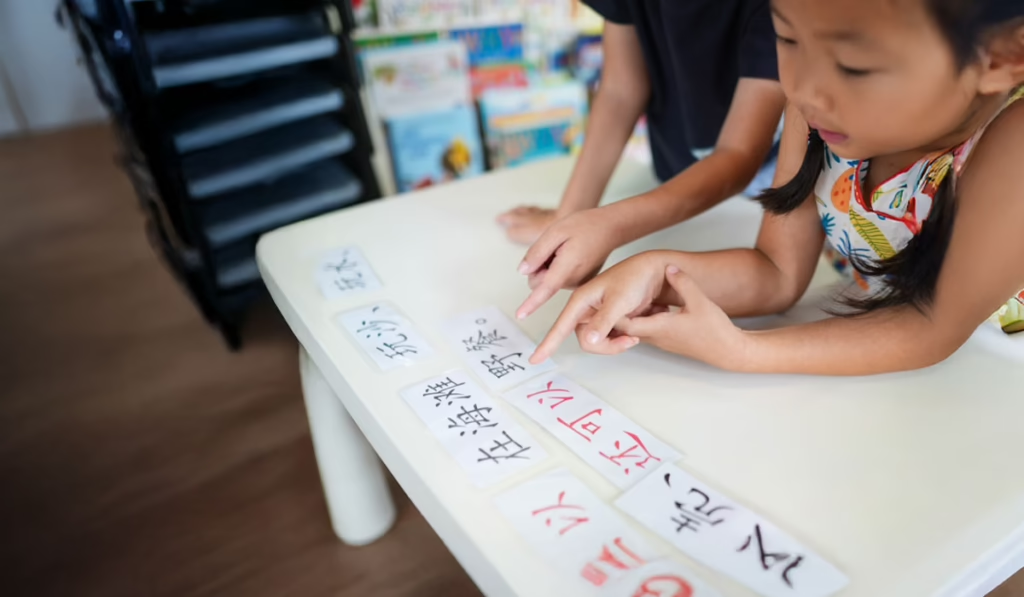
At the recent ECDA Early Childhood Celebrations & Conference (ECCC), keynote speaker Dr. Randa Grob-Zahary emphasised how executive functioning undergirds school readiness, with sequencing at its core.
Indeed, sequencing helps children follow multi-step instructions in classroom settings, making it easier for them to keep pace. It’s also key to reading comprehension, understanding the order of events in a story, and to grasping number patterns in early maths.
Over time, sequencing helps children tidy up, prepare materials in logical order, and sustain attention for structured lessons that become more demanding. This allows them to adapt more confidently to primary school routines and expectations.
How Parents Can Support Sequencing at Home
Sequencing often starts with simple routines at home. Ask your child to “stand up, walk to the sink, and wash your hands” before meals. These everyday steps help them understand that actions follow a logical order.
During mealtimes, guide your child through short, familiar sequences. They might “pick up their bowl, bring it to the table, and sit down.” Such small habits teach them that every task has a beginning, middle, and end.
As your child grows, introduce fine-motor tasks that involve focus and control. Opening their lunchbox, unwrapping a snack, and closing it neatly builds both independence and attention to detail.
Older preschoolers can take on small responsibilities during family time. For instance, they can help to lay the table, prepare food, or pack their own school bag for the next day. These activities encourage ownership and pride in being part of the household routine.
Self-care routines also strengthen sequencing skills. Encourage your child to dress themselves, starting with socks, then shoes, and fastening straps properly before leaving home.
Household chores provide more chances for your child to practise following steps. Sorting laundry, folding clothes, and putting them away teach your child how to complete a task in the correct order.
Visual checklists can be helpful too. Packing items like a water bottle, snack box, file, and jacket gives your child a sense of structure and readiness for school.
Finally, read together to reinforce sequencing through stories. Ask your child to retell a familiar story or arrange picture cards in order. These activities build memory, language, and logical thinking through play and conversation.
How We Use Purposeful Sequencing at Heartfield
Sequencing is a natural part of Heartfield Kindergarten’s curriculum. Our lessons are designed to move from simple to more complex tasks, allowing each child to build confidence step by step.
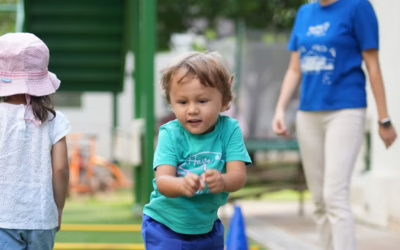
Each morning, our teachers begin with gross motor warm-ups before table activities. This transition helps our children settle their energy, focus their attention, and prepare their minds and bodies for learning.
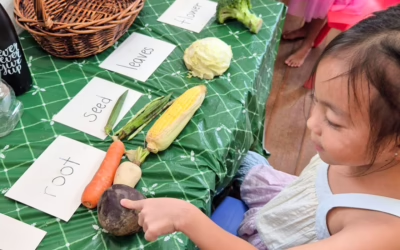
We also plan our stories, projects, and classroom routines with clear sequences in mind. Whether it’s completing an art project or acting out a story, children learn to follow steps in order and see how their efforts lead to a finished result.
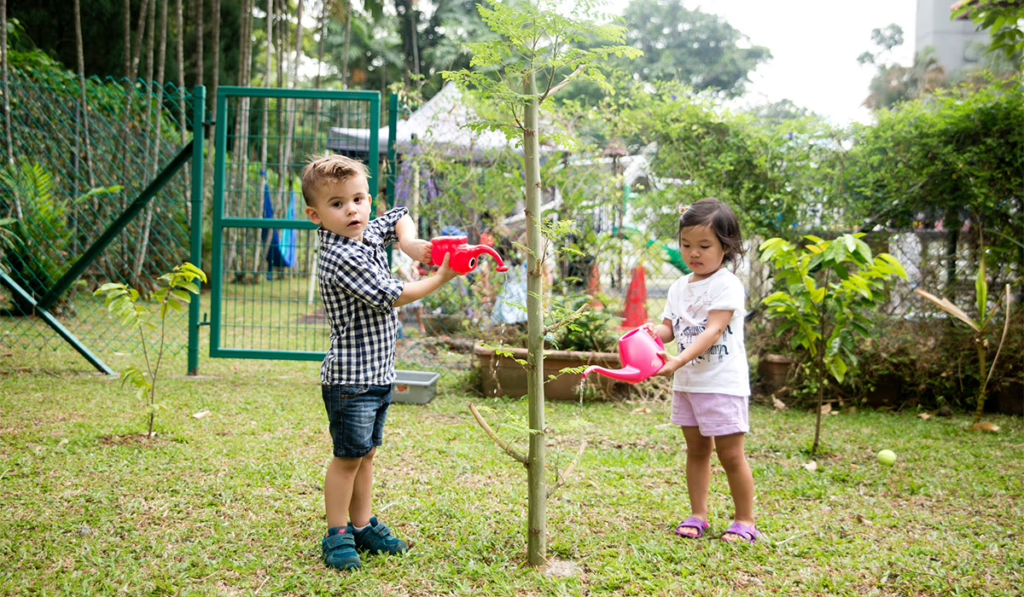
Sequencing is further reinforced through daily routines and classroom jobs. Packing up after playtime or helping to water plants gives Heartfield kids regular opportunities to practise organisation and responsibility.
Located at 31 Balmoral Road, we invite you to explore our multi-sensorial campus. Call us at +65 6835 2354, email info@HeartfieldKindergarten.com, or visit our website to arrange a visit.