Did you know that young children learn best through action? This method, known as experiential learning, captivates their minds when they touch, pour, sort, mix, stack, or explore their surroundings.
As a parent, you’ve probably seen this at home. A simple set of cups, seeds, or flour keeps your kid absorbed far longer than any worksheet ever could.
This article explores how experiential learning works, why it shapes confident learners, and how both home and school can work together to support it. These principles guide the way we design our classrooms, activities, and daily routines at Heartfield Kindergarten.
What is Experiential Learning?
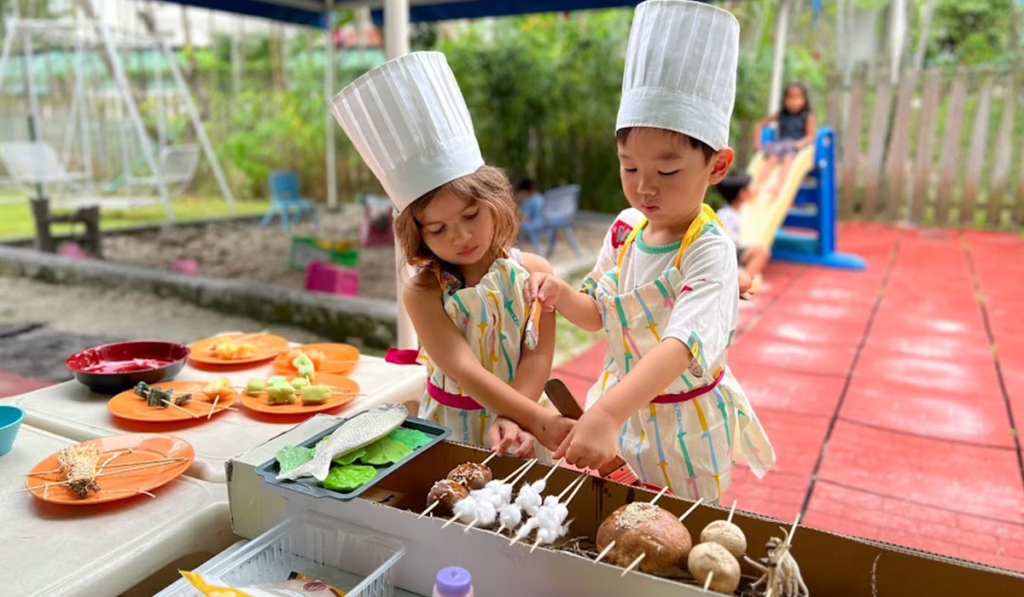
Experiential learning is a method of learning that begins with action. A child engages in hands-on activities, observes what happens, and develops an understanding from these experiences. They make sense of the world through touch, movement, pouring, stacking, and observation.
The idea draws from the work of David Kolb, an American educational theorist who published the Experiential Learning Model in 1984. Kolb described a four-part cycle: a child does something, reflects on what happened, forms a clearer idea, and then applies it in a new attempt. This steady loop strengthens both understanding and confidence.
This approach is particularly effective in early childhood education. Young children thrive when using basic tools, tackling real tasks, and seeing tangible results. Their natural curiosity propels the learning cycle, as each new experience builds on previous ones.
Benefits of Experiential Learning in Kindergarten
What are the advantages of incorporating experiential learning in a kindergarten?
For a start, abstract concepts found in books are easier to understand when children engage with materials. Through hands-on activities such as measuring, pouring, sorting, and comparing, early maths, science, and language feel more concrete and memorable.
Your child’s confidence also grows when they try new tasks, observe the outcomes, and make adjustments. Kindergarten offers a safe space for this steady cycle of action and adjustment. Motivation is built through first-hand success rather than through instruction alone.
Experiential learning further supports the natural diversity in every kindergarten classroom. Some children learn best through movement. Others prefer to talk, watch what they’re doing visually, or participate in a shared activity.
Such hands-on tasks give each child a clear entry point, helping them stay engaged and develop at a comfortable pace.
Examples of Experiential Learning in Kindergarten
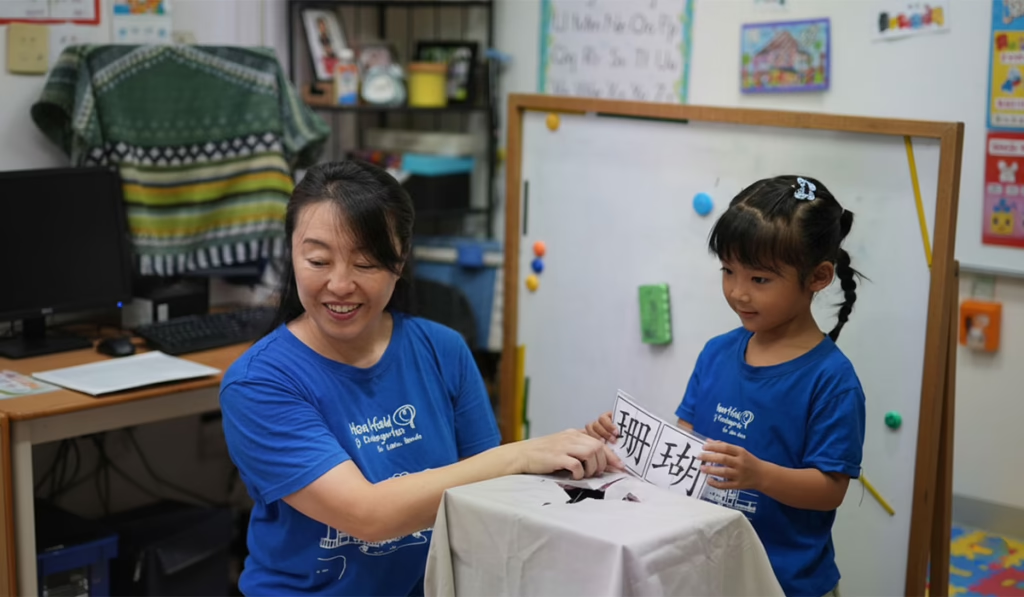
Curious to know how we integrate experiential learning into a kindergarten? Let’s explore a few examples. First, cooking activities play an important role. Measuring, mixing, and tasting help your child notice changes and understand simple maths and sequencing through real steps.
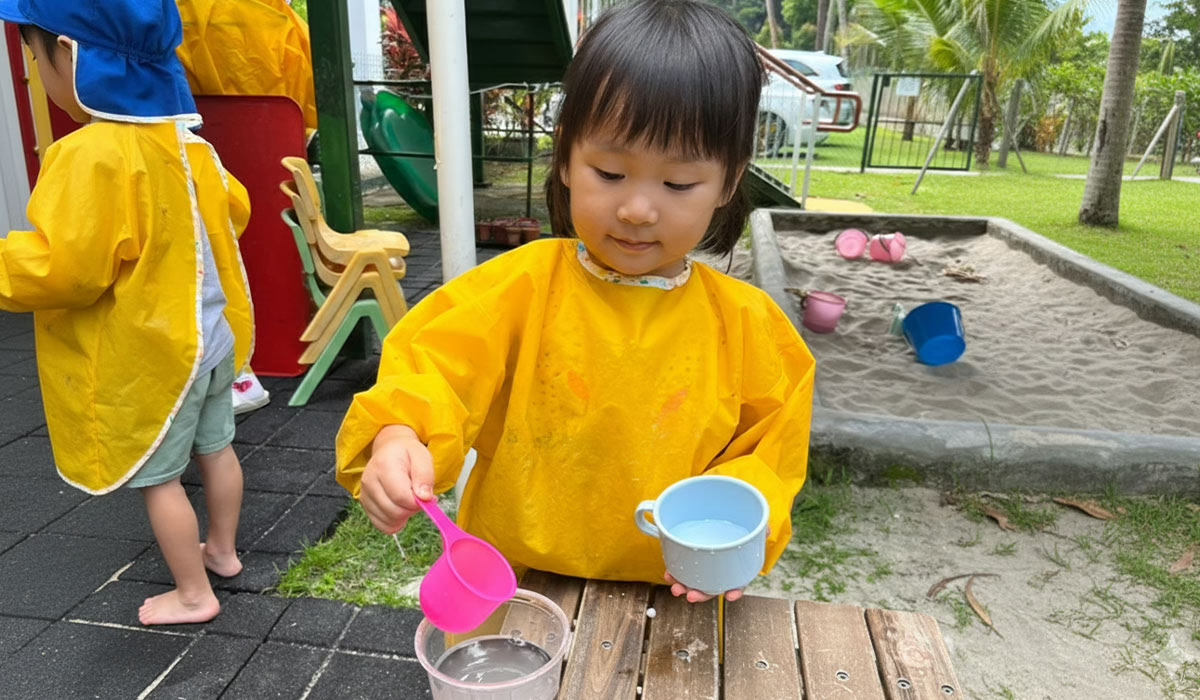
Next, science. Water play, plant growth, shadows, and magnets each prompt small experiments that build curiosity and observation. These help to enhance your child’s ability to grasp and visualise scientific principles.
How about storytelling? Well, story extensions add life to literacy. Acting out scenes or suggesting new endings helps your child to recall the plot and express novel ideas with confidence.
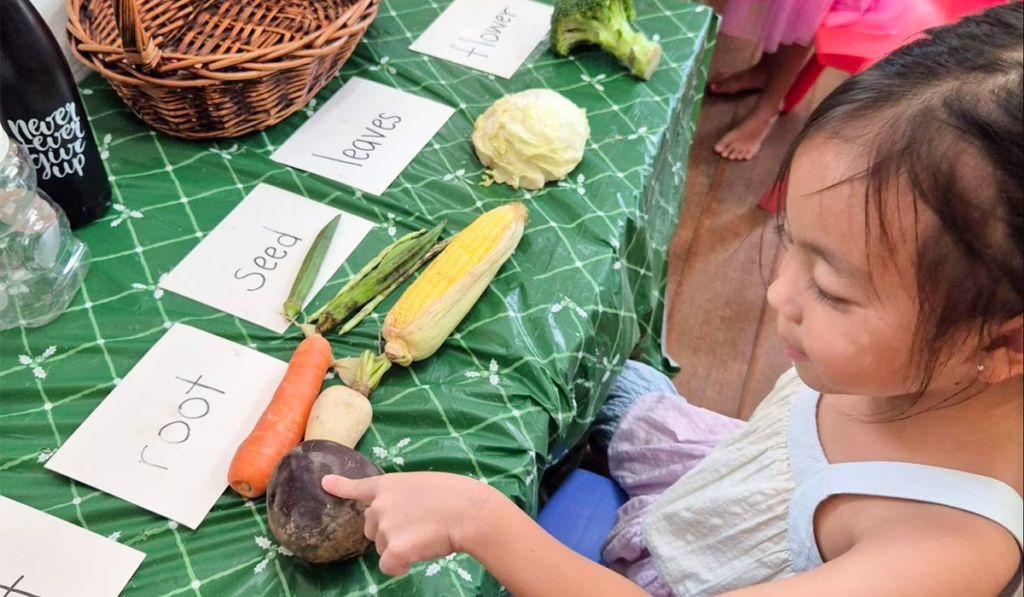
Mathematics can also benefit from experiential learning. Real-world maths activities help ensure that the numbers have meaning. Counting seeds, money, or sorting produce gives each quantity a shape that your child can see and handle.
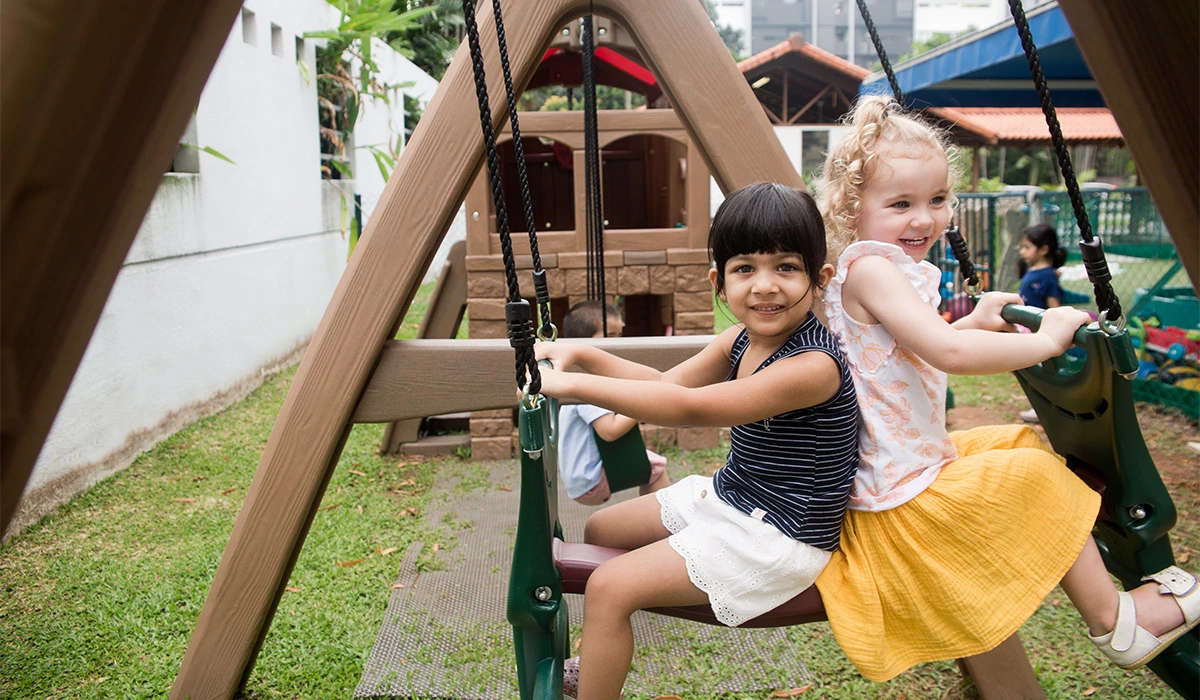
Outdoor activities add another layer of experiential learning to a kindergarten’s curriculum. Gardening and nature walks spark questions, encourage careful observation, and build early pattern recognition. And let’s not forget about the sights, sounds, and scents of nature. This hands-on approach not only makes learning fun but also deepens children’s understanding of various concepts!
How Parents Can Reinforce Experiential Learning at Home
You can reinforce experiential learning at home through everyday routines that already sit inside family life.
Invite your child to help with shopping, cooking, or sorting household items. Give them real tasks with clear steps. They’ll be able to see how things fit together, notice simple patterns, and start to understand early maths in a way that feels natural.
Reflection brings another layer of growth. A question like “Why do you think the dough didn’t rise?” encourages your child to pause, observe, and think about what happened.
Consider self-led projects like building a fort, caring for a plant, or setting up a small play corner. These allow your child to decide what to try next, strengthen their confidence and give them space to test solutions without pressure.
Outings extend experiential learning beyond your home. Wet markets, museums, and gardens offer new sights, smells, and textures that spark questions and conversations.
Finally, do not be afraid to ask open-ended questions. Asking “What do you notice?”, “What changed?” or “What do you want to try next?” gives your child space to reason, connect ideas, and speak their thoughts with ease.
How Heartfield Incorporates Experiential Learning
Experiential learning sits at the heart of our curriculum. Each topic includes hands-on activities across literacy, numeracy, science, and creative expression, allowing your child to experience ideas through action rather than talk alone.
Here, our educators design tasks that invite problem-solving. Children test ideas, try different approaches, and observe what works. This gives each activity a sense of purpose and helps your child build early confidence in thinking things through.
We also observe and discuss each child’s process. Short notes, photos, and conversations help us understand how they approach a task. Parents often appreciate seeing these moments because the steps taken matter as much as the final product.
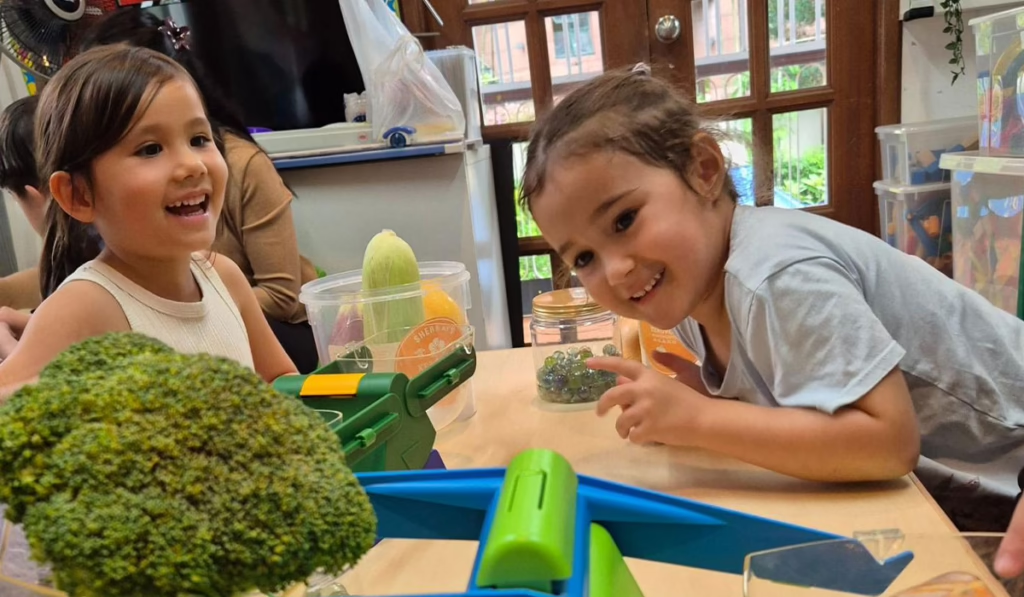
The spaces themselves support active learning. We include real tools such as weighing scales, measuring cups, plant markers, and simple household items. These materials help children connect classroom activities to the everyday world.
We weave design thinking into our curriculum in a simple, child-friendly way. Your child observes what is in front of them, suggests an idea, tries it out, and adjusts their approach as the task unfolds. This strengthens curiosity, reasoning, and confidence.At Heartfield, learning is experienced and remembered. Located at 31 Balmoral Road, we invite you to explore our multi-sensorial campus. Call us at +65 6835 2354, email info@HeartfieldKindergarten.com, or visit our website to arrange a visit.