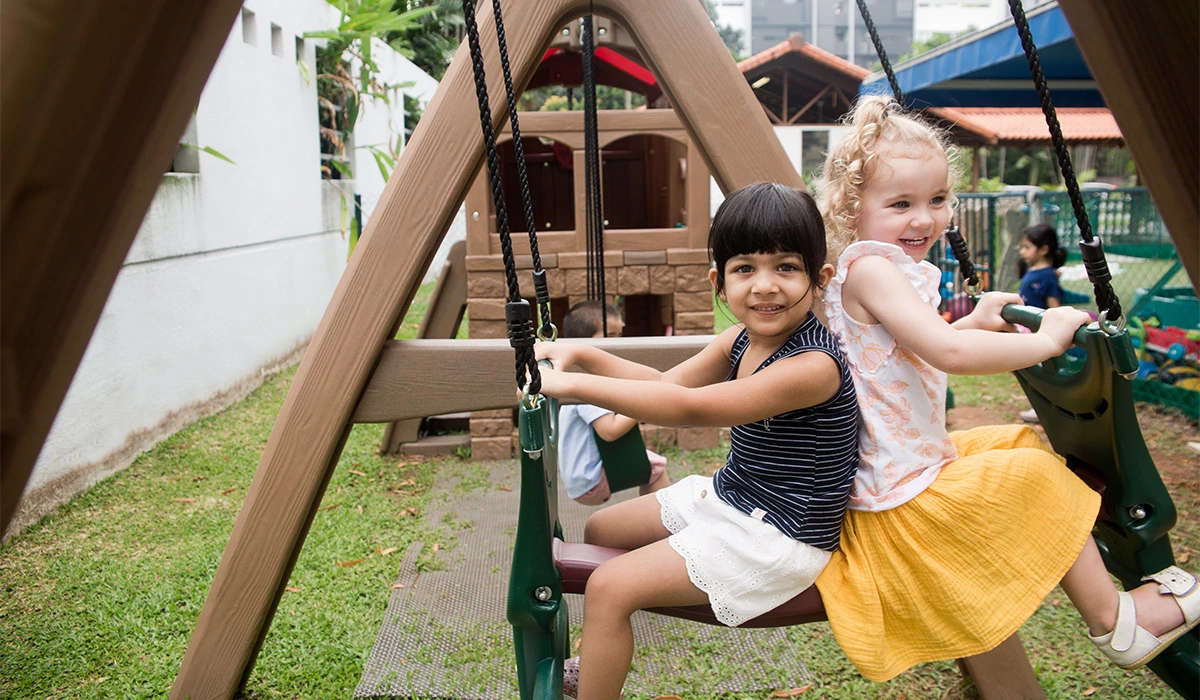
Does your child watch a group game tentatively before deciding to join in the fun? Do they hold your hand a little tighter when meeting someone new?
Social anxiety often shows up in these everyday moments, especially when a place, activity or person feels unfamiliar.
At this age, making new friends or playing in a group takes practice. Your child is still learning how to start conversations, read facial expressions, take turns and find their place within a group.
Fortunately, they’ll begin to speak, play and participate with greater ease over time. Your child will build this confidence at their own pace, shaped by their personality, past experiences and how secure they feel with those around them.
In this article, you’ll learn what social anxiety means, how you may recognise it, when extra support may be needed, and how we manage children with social anxiety at Heartfield Kindergarten.
What is Social Anxiety?
Social anxiety in young children occurs when everyday interactions cause significant anxiety, self-consciousness, and embarrassment. It often stems from a fear of being watched, scrutinised or judged negatively by others.
Your child may worry about saying the wrong thing, making a mistake or drawing unwanted attention. As a result, they may avoid speaking to others, joining group activities or taking part in class. When this fear persists, it can affect their friendships, daily habits, and time in school.
Some nervousness in social situations is a normal part of life. All of us, regardless of whether we are children, teenagers, adults or seniors, feel uneasy when meeting new people or entering an unfamiliar group.
For young children, however, emotional security plays an important role in building social confidence. When your child feels accepted and supported, they can gradually learn to express their thoughts, share their feelings and interact with others.
Examples of Social Anxiety
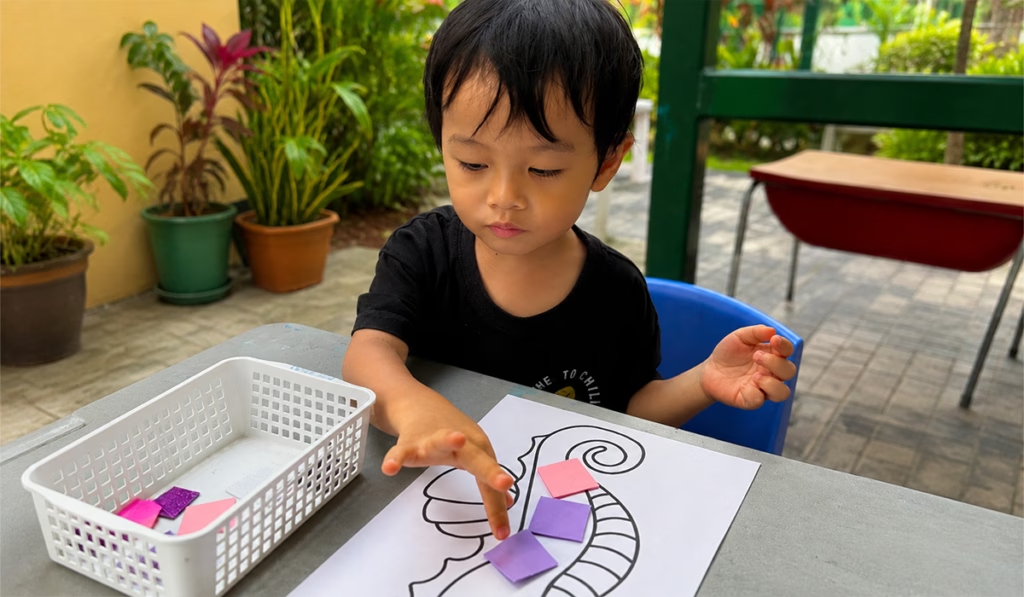
Now, how can you tell if your child suffers from social anxiety? Let us look at some of its most common signs and symptoms.
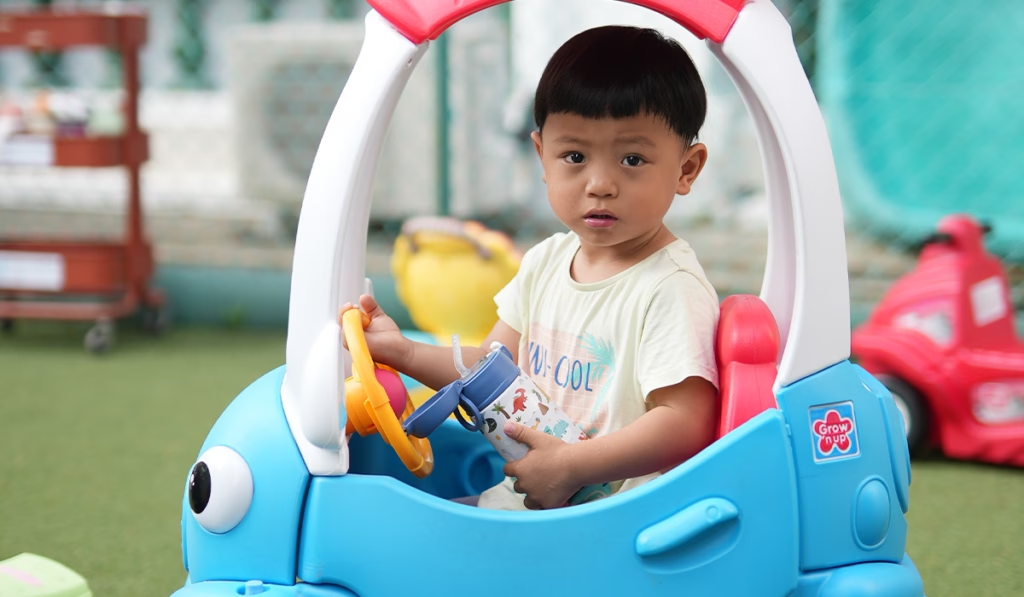
In younger children, social anxiety often shows up through crying, tantrums, clinging tightly to a parent or refusing to speak when expected to interact with adults or peers. Your child may avoid eye contact with unfamiliar people or stay close to you during a social activity.
At other times, anxiety leads to avoidance. Your child may hesitate to enter a room where people are already seated, resist joining a group or feel afraid to eat in front of others. They may want to participate, but the fear of being watched or judged makes the situation feel overwhelming.
Social anxiety can also cause physical symptoms. Your child may blush, sweat, tremble or complain of an upset stomach or nausea. They may then worry that others will notice these reactions and that they will feel more embarrassed.
Such behaviours are best viewed as part of a wider pattern. A healthcare professional will consider how often they occur, how long they last and how they affect your child’s friendships, schooling and daily routines.
Social Anxiety Disorder
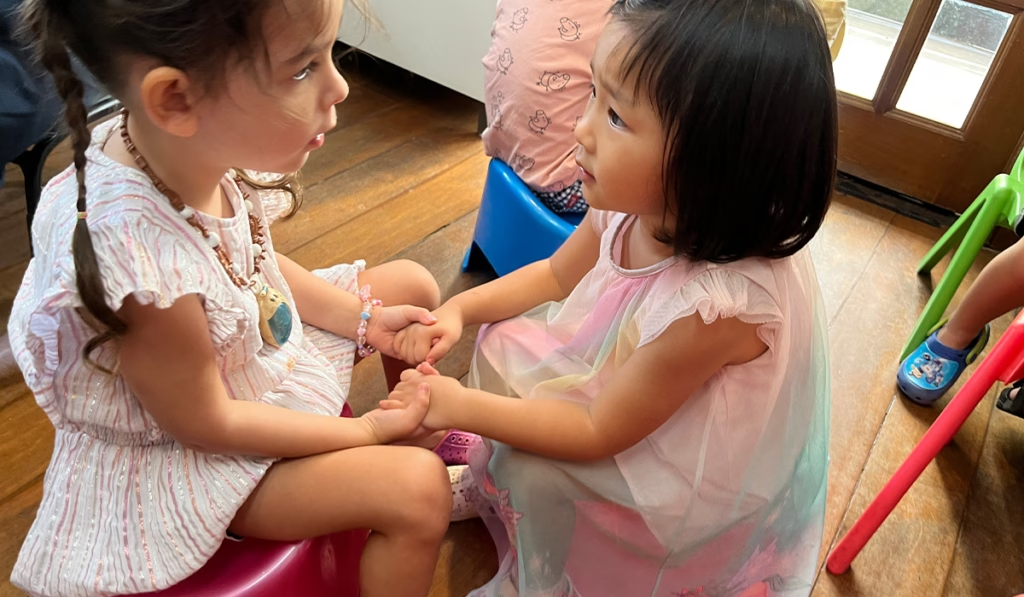
It is normal for your kindergarten-aged child to experience some level of social unease, particularly when they meet new people or join an unfamiliar activity. At times, however, the fear becomes persistent and begins to affect daily life. This may point to social anxiety disorder.
A child with social anxiety disorder may feel intense distress before a classroom activity, birthday celebration, family gathering, or meal with others. They may start worrying long before the event and try to avoid it. This impacts their participation in class, friendships and family routines.
Should this happen, your child may replay what happened during a social situation and focus on their perceived mistakes. They may fret incessantly that they said something wrong or expect an awkward moment to lead to rejection or embarrassment.
Over time, such behavioural patterns can make everyday interactions more difficult.
Left unmanaged, social anxiety disorder can persist and affect your child’s well-being. Early support helps them develop coping skills and participate more confidently in daily activities.
For younger children, support sometimes includes psychosocial interventions and parenting strategies. A mental health professional may recommend psychotherapy or other treatment based on the child’s age, symptoms and individual needs.
Speak with a healthcare professional when the anxiety remains severe, lasts for several months or interferes with home life, school, friendships or everyday activities.
How to Manage Social Anxiety in Young Children
The good news is that we can do a great deal as parents to help our children manage social anxiety. Here are some tips taken from Health Hub, the UK’s National Health Services (NHS), and the CDC in the US.
Start by keeping a journal. Record the situations that make your child feel stressed. Note where they were, who was present, how they reacted, and what helped them feel better. Over time, you may notice patterns which you can share with their teacher or healthcare professional.
If the anxiety persists or disrupts school, friendships and family routines, seek help early. Your child’s teacher, paediatrician or mental health professional can help you decide what support may be useful. Early treatment can help manage the symptoms, with younger children often receiving psychosocial support and parenting strategies.
At the same time, watch the signals you give your child. Children often look to their parents to decide if a situation feels safe. Show a calm reaction and help them take small steps, such as saying hello to one classmate before joining a bigger group.
Finally, use clear praise to acknowledge your child’s effort and attitude towards learning. Instead of saying “Good job”, you could say, “I saw you working so diligently,” or “I noticed how you waited for your turn and spoke to your friend.” This helps your child recognise the action, effort or bravery behind their progress.
Heartfield’s Approach to Social Anxiety
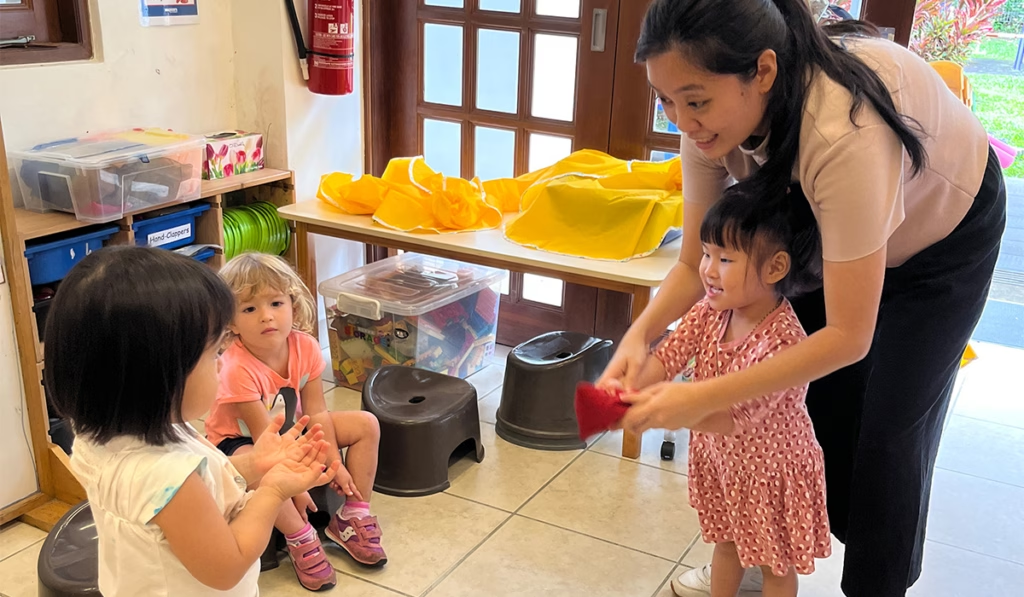
At Heartfield Kindergarten, we recognise that every child develops social confidence at their own pace. Our teachers give our children unhurried time to observe, process what is happening, and join an activity only when they feel ready.
Here, we use small-group activities to help your child practise social skills in a comfortable setting. Working with one or two classmates gives them ample opportunities to listen, take turns, share ideas, and respond to others’ feelings.
Our spacious kampong campus provides room for children to move between indoor and outdoor activities. These open spaces give your child the mental and physical room to settle, explore and connect with their friends.
During role-play, our teachers guide children through everyday social situations. They may be asked to join a game, share a toy or resolve a disagreement with a friend. Doing so helps our children find the words they need should similar situations arise.
Our approach reflects MOE’s Nurturing Early Learners Framework, which emphasises purposeful play, quality interactions, social and emotional skills, and positive learning dispositions.
We highlight dispositions such as perseverance, engagement and reflectiveness through specific feedback. For example, a teacher may say, “I noticed how you waited for your turn,” so your child can recognise the effort behind their actions.
Above all, our teaching is guided by biblical principles. We believe that every child is beautifully and wonderfully made, with a unique identity, gifts and talents. This guides us in supporting each child with patience and care as they learn to express themselves, form friendships, and take part in group activities.
Located at 31 Balmoral Road, we invite you to explore our multi-sensorial campus. Call us at +65 6835 2354, email info@HeartfieldKindergarten.com, or visit our website to arrange a visit.