Is your child chatty at home but quiet around unfamiliar people? Do they shy away from joining other children at play?
As parents, we worry if our children’s shyness affects their ability to make friends, participate in activities, or enjoy preschool. However, every child responds differently to unfamiliar people and situations. Some simply need more time to feel comfortable.
Shyness in young children is often linked to their natural temperament. With patience, encouragement, and positive social experiences, we can help shy preschoolers build the confidence to express themselves and interact with others.
In this article, we’ll explore what causes shyness in young children, how parents and teachers can help, and how Heartfield Kindergarten supports children in building social confidence at their own pace.
What Shyness in Young Children Looks Like
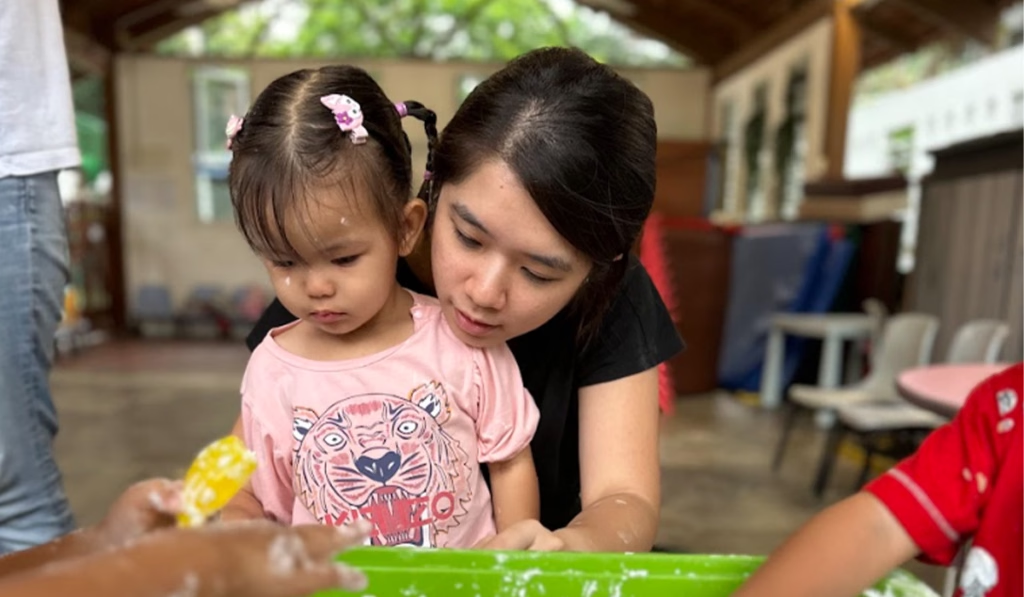
Shyness in preschoolers often appears in everyday situations. Your child may prefer watching other children play from a distance, stay close to you, or hesitate to join a group activity even when interested.
At preschool, shy children may speak freely with friends they know. However, they’ll freeze up and become quiet around new classmates or teachers. Some take longer to answer questions. Others avoid speaking altogether. They may also prefer observing an activity before participating.
According to ECDA’s Beanstalk article on children’s temperaments, such children may have a “slow-to-warm-up” temperament. They tend to be more cautious around unfamiliar people and take longer to adjust to new situations.
Why Are Some Children More Shy Than Others
Some children take to new faces and activities almost immediately. Others need time to settle. Much of this depends on their temperament, the natural way your child responds to unfamiliar people and situations.
Past experiences play a part too. If your child felt left out during a previous group play session, they will hesitate to join the next time. Familiar faces, regular routines, and a trusted adult nearby can help them feel safe enough to try again.
According to the American Academy of Paediatrics, children with a “slow-to-warm-up” temperament tend to be more cautious in unfamiliar settings. They often feel more comfortable once they get to know the people around them. Observing how others interact gives them time to decide when they’re ready to participate.
How Parents Can Build Social Confidence
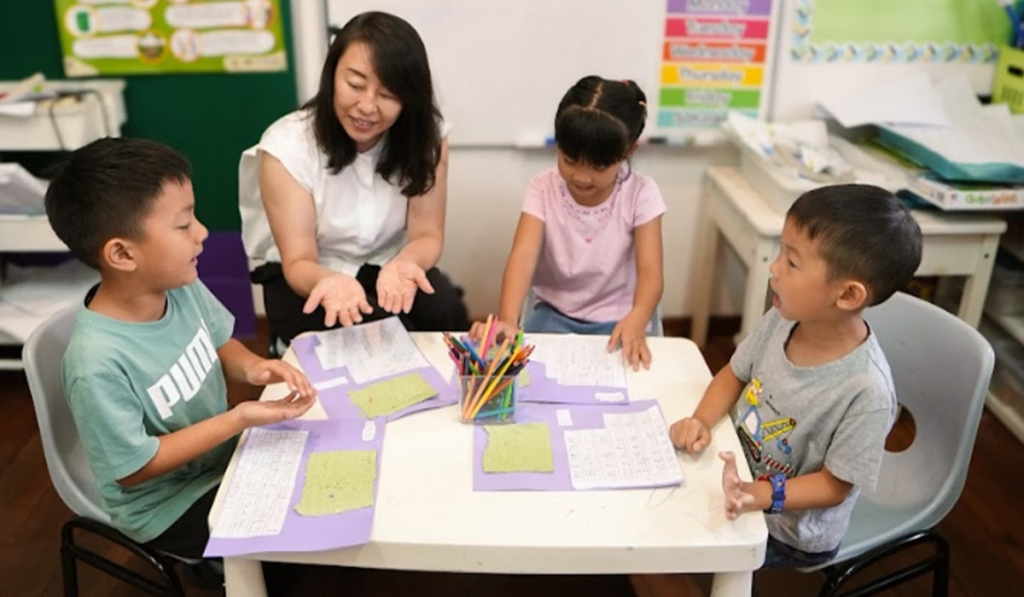
What can we as parents do to help our shy preschooler? Here are some possibilities:
- Prepare them for new situations. Before visiting a new place or meeting unfamiliar people, explain exactly what they can expect. Talk about who they’ll meet, what they’ll do, and how the activity may unfold.
- Practice through role play. Rehearse simple social situations at home, such as greeting a new friend or asking to join a game. You can even take turns pretending to be the teacher and student. According to the American Academy of Paediatrics, role play can help shy children practise what to say or do in unfamiliar situations.
- Start with small social steps. Encourage your child to play with one familiar friend before introducing them to a larger group. Give them time to feel comfortable and gradually increase their opportunities to interact with others.
- Give them choices and responsibilities. Let your child choose what to wear, water the plants, help set the table or take charge of a simple household chore. These everyday decisions help them develop independence and confidence in their abilities.
- Celebrate small successes. Acknowledge your child’s efforts when they speak up or try something unfamiliar. A simple “Well done for giving it a try!” can encourage them to participate again. Be patient and let their confidence grow at their own pace.
Helping Shy Children at Preschool
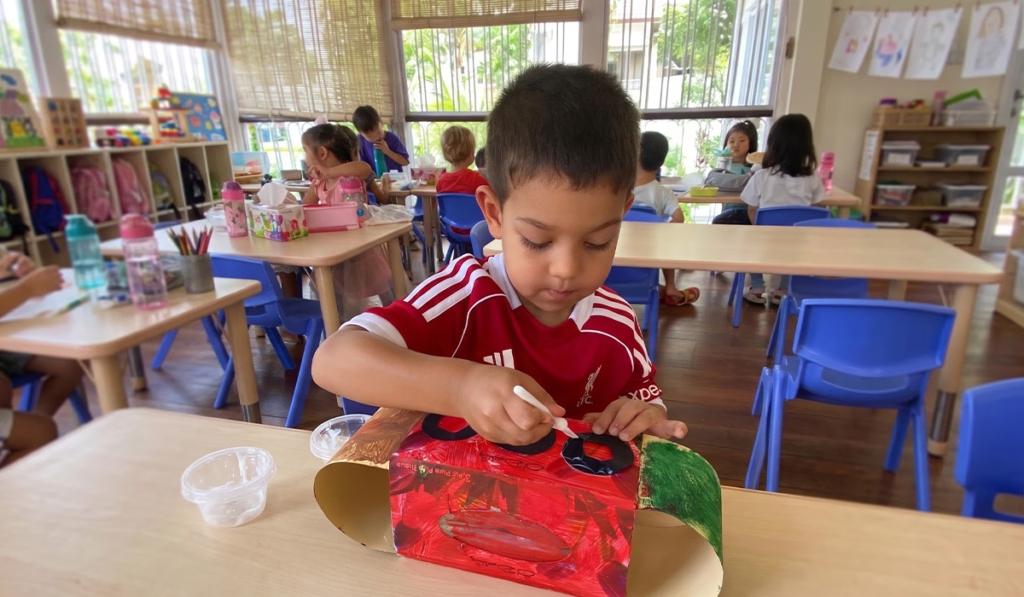
In a busy preschool classroom, shy children may feel like they blend into the wallpaper. They have their own opinions but often hold back when others speak first.
A simple morning greeting from their teacher can help them feel more at ease. Familiar routines and faces help too. Teachers can encourage them to play with a trusted friend before joining a larger group.
Sometimes, the easiest way to encourage participation is through play. Blocks or art materials give children something familiar to focus on. They can gradually interact with others without pressure to speak.
Teachers need to watch for small signs of readiness. Perhaps the shy child starts answering questions or moves closer to a group activity. Knowing when to offer a gentle nudge and when to give the child more time can make all the difference.
When Shyness Affects Your Child’s Daily Life
Most shy preschoolers become more comfortable as they get used to new people and surroundings. But what happens when shyness affects daily life?
Perhaps your child is so anxious about attending preschool that they refuse to go. Or they want to make friends but struggle to join in after several weeks. Some children also find it difficult to ask teachers for help when needed.
According to Singapore’s HealthHub, anxiety becomes a concern when it is “persistent, excessive, and overwhelming” and starts to affect a child’s daily activities. This may include difficulties at school or avoidance of social situations.
Parents should pay attention to how long these difficulties persist. A child who needs a few days to settle into a new class may simply need more time. However, if the same problems continue or worsen, it’s worth discussing them with their teachers.
Still concerned about your child’s behaviour? Consider speaking to your family doctor. Specialists like KK Women’s and Children’s Hospital (KKH) advise parents to seek guidance when they have concerns about their child’s social-emotional development. Your child’s teacher can also share useful observations about how they behave at preschool.
How Heartfield Builds Social Confidence in Children
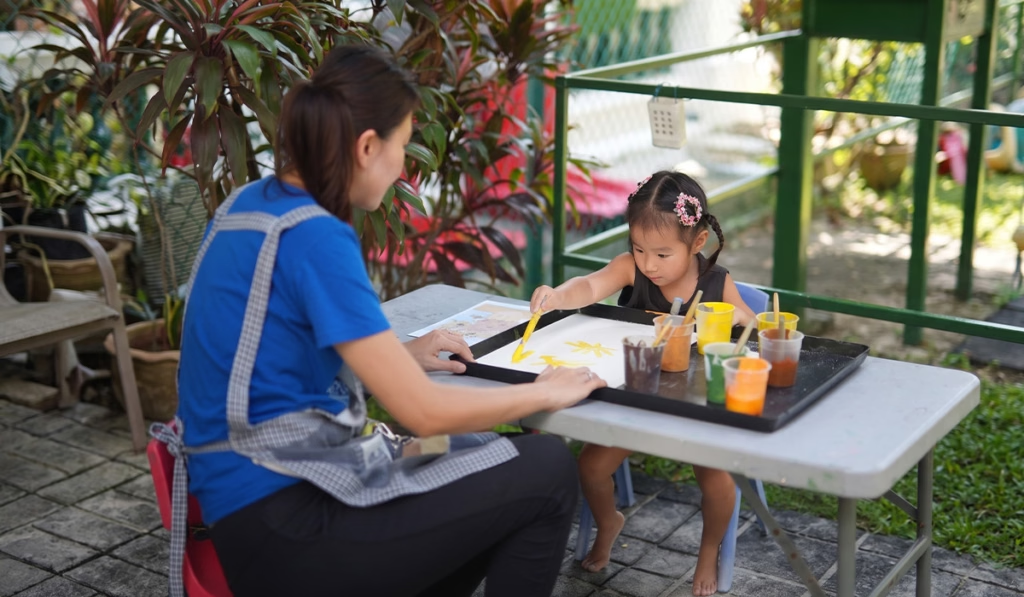
Seen children who chatter freely at home but fall silent at preschool? We have. Some showed signs of selective mutism. Over time, these children grew chatty and pally with their teachers and classmates at Heartfield. What helped them open up?
Much of this comes from the sense of belonging we cultivate at Heartfield. We want every child to feel emotionally safe and at home. We want them to be themselves without fear of judgement. It’s fine for them to be quiet or to take longer to settle in. Mistakes are part of learning too.
Our teachers understand this. They take time to know each child personally and pay attention to their needs. With smaller groups and an unhurried pace, children have space to observe before taking part. Nobody is rushed into an activity before they’re ready.
Our kampong-style environment helps too. Children have many opportunities to play informally and interact with others. We encourage them to make choices and take on small responsibilities, like helping with classroom tasks. These little “wins” help them feel capable and gain confidence.
Our teachers celebrate each child’s progress, however small, and work closely with parents to support their development. Sometimes, it takes weeks or months for a shy child to find their voice. We’re happy to give them that time.
If you’re concerned about your child’s shyness, we’d love to show you how we support children at Heartfield. Visit us at 31 Balmoral Road to experience Heartfield yourself. Call +65 6835 2354, email info@HeartfieldKindergarten.com, or contact us to arrange a visit.